


Welcome to the era of brand déjà vu

by Maranda Mitchell
Brand Director
3 August 2026
AI has made content faster and easier to produce, but it is also accelerating a much older brand problem: sameness. This article explores why distinctive brands still require human judgement, original thought and a point of view worth amplifying.
AI didn’t make brands boring. It just gave boring brands a much faster way to publish. Last week, I opened six websites in six completely different industries.
A law firm. A skincare company. An architecture studio. A technology platform. A winery. A wellness retreat.
By the third tab, I had forgotten which was which.
There were cinematic videos of people walking through sunlit rooms. There were grainy black-and-white portraits, tasteful serif fonts and suspiciously perfect candid moments. One brand was reimagining its industry. Another was redefining it. Two were transforming the way we… something. All six were human-centred. All six believed in the power of connection. All six were apparently doing things differently.
They all looked beautiful.
They all sounded competent.
They all said absolutely nothing.
This is the new brand déjà vu.
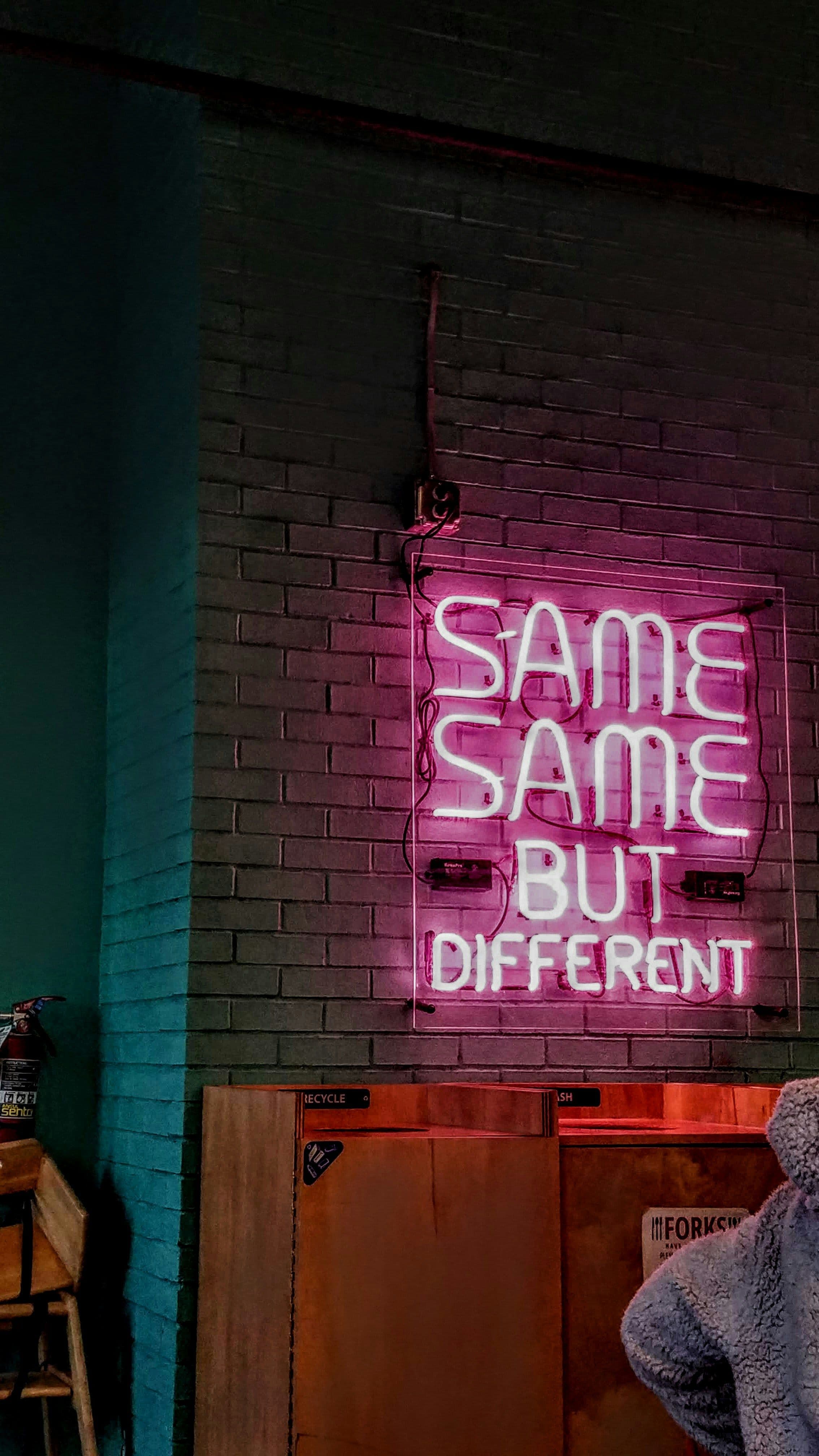
You have seen the website before. You have read the caption before. You have received the email before. Different logo. Different product. Same carefully sanded-down personality.
Same promise. Same polish. Same pulse.
Or lack thereof.
Everything is beginning to look, feel and sound the same. Not because humanity has run out of ideas, but because businesses have become increasingly terrified of using one. They look sideways at the brands succeeding around them, gather the visual evidence into a mood board, feed the verbal evidence into AI and ask for something “fresh”.
The result is usually the average of everything they just showed it.
Which is precisely what they asked for.
AI did not invent sameness. Brands were copying each other long before a blinking cursor could generate 40 Instagram captions in six seconds. We have always looked to the category leader, borrowed its haircut and hoped some of the success came with the fringe. Banks studied other banks. Hotels studied other hotels. Design studios studied the same three Scandinavian design studios.
The instinct is human. We imitate because imitation feels safe. It helps us learn the rules, recognise what belongs and avoid being the strange person standing alone at the edge of the room wearing something that might turn out to be hideous.
But belonging and being noticed are not the same ambition.
And there is the rub.
Most brands say they want to stand out. What they actually want is to fit in more beautifully than everyone else. They want originality with evidence. Distinction with precedent. Something nobody has seen before, preferably supported by three competitor examples and last year’s trend report.
They want different.
But not too different.
AI is spectacularly good at servicing this particular contradiction. Give it a vague brief and it will return something vague, only cleaner. Ask it to make you sound premium and it will hand you a paragraph about timeless craftsmanship, quiet confidence and considered details. Ask for bold and it will tell you to break boundaries. Ask for approachable and it will start talking like a Labrador wearing a branded hoodie.
It is not failing.
It is completing the pattern.
The machine works with what has already been said. The problem begins when nobody in the business has contributed anything new.
No sharp observation. No inconvenient truth. No strange obsession. No actual position. No sentence that might make one person nod furiously and another person mildly annoyed.
Just a prompt asking to sound interesting.
But you cannot outsource having a point of view.
You can outsource the articulation of it. You can use AI to sharpen, interrogate, expand, trim and organise an original thought. You can ask it to find the hole in your argument, challenge the cliché in your first draft or suggest ten better ways to land the ending.
But the interesting bit has to exist first.
That bit comes from noticing something.
It comes from the conversation your customer keeps having that nobody in your industry seems to understand. It comes from the part of your work you believe everyone else is getting wrong. It comes from experience, annoyance, taste, instinct and the deeply subjective belief that things could be done better.
AI can help you say it.
It cannot give you a reason to care.
This is why so much brand content now feels oddly vacant. There are more words than ever, but fewer ideas inside them. The content calendar is full. The LinkedIn page is active. The website has been optimised. The founder is posting three times a week because a personal-branding expert said consistency builds authority.
But consistency without thought does not build authority.
It builds wallpaper.
And the wallpaper is spreading.
Scroll through enough brand feeds and you begin to notice the templates. The vulnerable founder confession that reaches an uplifting conclusion by paragraph seven. The contrarian opening that is not remotely contrarian. The carousel promising five uncomfortable truths, none of which will cause any discomfort. The email with a one-line sentence.
Then another.
Then another.
For drama.
Even rebellion has developed a house style.
This is what happens when everyone uses the same references, the same tools and the same definition of good. The work becomes technically proficient and culturally interchangeable. Every brand claims to be disrupting the category while behaving exactly like the category.
The irony is almost too perfect.
AI arrived promising infinite possibilities. Many brands are using it to produce the same five ideas more frequently.
Of course, sameness is not always obvious. Sometimes it arrives wearing very expensive typography. Sometimes it wins design awards. Sometimes it is polished so beautifully that nobody notices there is no thought underneath it.
But audiences notice eventually.
Perhaps they cannot explain why the brand feels forgettable. They simply scroll past it. They read the headline and feel no need to read the second sentence. They visit the website, admire it briefly and close the tab without remembering the name.
Because beauty can attract attention.
Only distinction can hold it.
The brands worth following do not merely communicate more. They have something identifiable running through everything they communicate. A specific way of seeing the world. A sense of humour. A standard. An enemy. A belief they repeat until the market begins repeating it for them.
Their work has fingerprints on it.
You could remove the logo and still know who said it.
That should be the test.
Take the name off your latest article. Remove the branding from your social posts. Strip the logo from your homepage. Would anybody recognise you? Or could the same sentences belong to six competitors, a recruitment company and a slightly progressive insurance provider?
Would anyone miss your voice if it disappeared tomorrow?
That question should make more brands uncomfortable than it does.
Because the threat is not that AI will replace creativity. The threat is that AI will make mediocrity so easy, so fast and so convincingly polished that businesses stop noticing they have become mediocre.
Before AI, being bland still required effort. Someone had to sit down, open a blank document and personally write that the company was passionate about delivering innovative solutions.
Now we can generate an entire quarter of it before lunch.
More content. More efficiently. More consistently.
More nothing.
The answer is not to stop using AI. That would be like blaming the microphone because the speech was boring. The answer is to stop approaching it empty-handed.
Bring the thought. Bring the tension. Bring the opinion you removed from the first draft because it felt a little dangerous. Bring references from outside your category. Bring the thing you noticed that nobody else has put into words yet.
Then use the machine.
Use it ruthlessly.
But do not ask it to manufacture a personality your business has never bothered to develop.
Originality has always been temporary. Anything genuinely different eventually gets noticed, admired and copied. The new visual language becomes a template. The sharp turn of phrase becomes a LinkedIn formula. The industry catches up, then crowds around the idea until it no longer belongs to anyone.
So you move again.
You keep noticing. You keep questioning. You keep resisting the temptation to repeat yourself simply because the previous version worked. When the rest of the room begins saying your sentence, you write another one.
Is that exhausting?
Probably.
But being interesting has never been the easiest option.
Being forgettable is easy. There are tools for that now.
So before you publish another perfectly competent post, another exquisitely art-directed reel or another homepage promising to redefine what is possible, ask yourself:
When was the last time your brand said anything remotely interesting?
Not polished.
Not professional.
Not optimised.
Interesting.
Because in a world where everyone can produce more, faster, the brands people remember will be the ones brave enough to have something worth saying.
by Maranda Mitchell
Brand Director
3 August 2026
The Silent Pact
Every time you read something helpful or just down right enjoyable, you promise to share it with a peer and subscribe to our Creative Insider.
By clicking 'sign up', you agree to our terms. We only send an email or two a month, unsubscribe anytime.
More insights
Queenstown has a branding inferiority complex
They went to Auckland for a bigger agency. They came back for a better answer.

Why Brand Alignment Is the Foundation of Business Growth
When your brand and your business aren't saying the same thing, growth stalls. Here's how to close the gap.
How Business Strategy Fits into Brand Strategy and Why Alignment Is Essential